
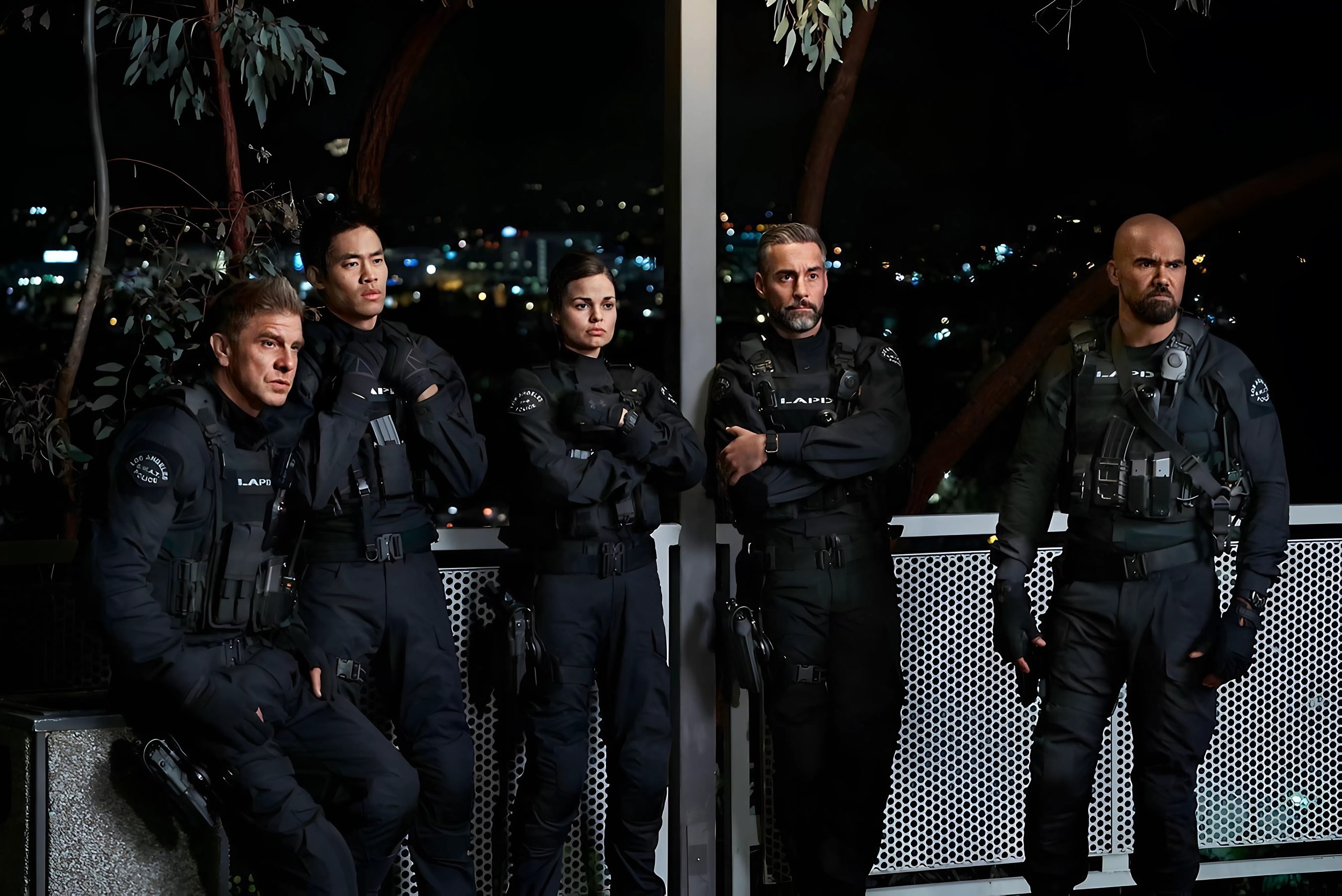
The Biggest Challenge S.W.A.T. Faced Wasn’t the Missions—It Was Staying Relevant for Eight Seasons
Launching a successful television series is difficult.
Keeping that success alive for nearly a decade is even harder.
Between 2017 and the end of its original run, S.W.A.T. navigated one of the most competitive periods in television history. Streaming platforms transformed the industry, audience habits changed dramatically, and viewers suddenly had more choices than ever before.
Many network dramas quietly disappeared during that transition.
S.W.A.T. didn’t.

Instead, it continued attracting loyal audiences by evolving without abandoning the qualities that made the series successful in the first place.
Television Changed Faster Than Ever
When S.W.A.T. premiered, traditional network television still dominated weekly viewing habits.
Within just a few years, streaming services began changing everything.
Entire seasons became available at once.
Shorter episode counts became increasingly common.
Viewers started expecting cinematic production values from every new series.
For a network drama producing more than twenty episodes a season, keeping pace with those expectations was no easy task.
Yet S.W.A.T. continued delivering ambitious action while maintaining a demanding production schedule.
The Series Never Tried to Copy Streaming Shows
Instead of completely reinventing itself to imitate streaming dramas, S.W.A.T. remained confident in its own identity.
Episodes continued balancing tactical action with character development.
Stories remained accessible for viewers tuning in weekly while still rewarding those following the larger journey of the squad.
That balance allowed the series to appeal to multiple generations of television audiences at the same time.
It never felt trapped in the past.
But it also never chased every passing trend.
Consistency Became a Competitive Advantage
Many long-running dramas lose momentum because audiences no longer recognize the show they originally loved.
S.W.A.T. largely avoided that problem.
Its visual style remained recognizable.
Its storytelling maintained a familiar rhythm.
Its focus on disciplined teamwork and high-pressure decision-making never disappeared.
That consistency created trust.
Fans knew what kind of experience they would receive every week, and the series continued delivering on those expectations season after season.
Surviving in an Unpredictable Industry
The television landscape around S.W.A.T. changed constantly.
New competitors arrived every year.
Viewing habits evolved.
Audience expectations shifted.
Yet the series continued finding ways to remain part of the conversation because it understood something fundamental.
Long-term success isn’t always about becoming the loudest show on television.
Sometimes it’s about becoming one viewers know they can always rely on.

A Legacy That Goes Beyond Ratings
Today, S.W.A.T. is remembered not simply because it lasted eight seasons.
It is remembered because it successfully navigated one of the most dramatic periods of change in modern television without losing its identity.
That’s a rare accomplishment.
Many shows survive for years.
Far fewer remain consistently recognizable throughout that journey.
For S.W.A.T., staying true to its core may have been the most important mission it ever completed—and one that ultimately secured its place among the most enduring action dramas of its era.