
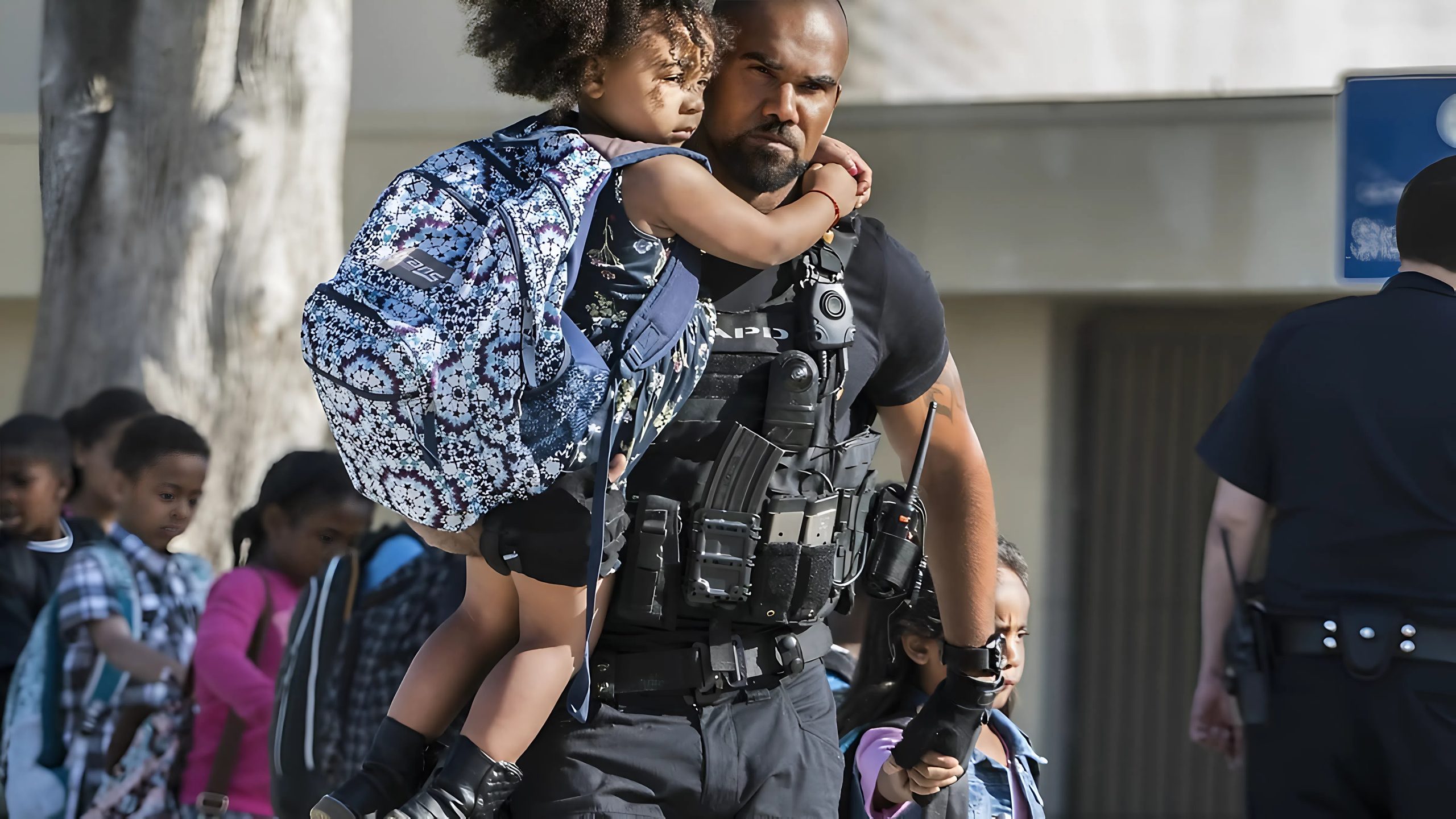
Why S.W.A.T.’s Most Memorable Moments Had Nothing to Do With Explosions
Action television has always relied on spectacle.
Explosions become larger, chase scenes become faster, and visual effects continue growing more impressive with every passing year. In an era where audiences have access to blockbuster-level streaming productions, many network dramas feel pressure to compete by making every episode bigger than the last.
S.W.A.T. certainly embraced large-scale action, but the series understood something that many productions overlook.

The most memorable moments weren’t always the loudest.
Instead, they often came from watching a group of highly trained professionals operate with complete trust in one another. Long before the first breach, the first command, or the first arrest, the series demonstrated that successful missions depended on teamwork more than individual heroics.
That philosophy became one of the defining characteristics of the show throughout its eight-season run.
No One Character Was Ever Meant to Carry Every Mission
Many action dramas revolve around a single unstoppable hero capable of solving every problem alone.
S.W.A.T. deliberately avoided that formula.
Although viewers naturally formed favorites among the members of 20-Squad, the series consistently reminded audiences that every operation required contributions from multiple people with different responsibilities.
One officer might gather intelligence.
Another would coordinate communication.
Someone else would manage negotiations while the tactical team prepared to move.
Each role mattered because every decision influenced the outcome of the mission.
The result was a series that celebrated collaboration instead of individual glory.
Communication Was Treated Like a Tactical Skill
One of the show’s most underrated strengths was how seriously it treated communication.
Simple instructions, quick updates, and carefully timed commands weren’t just background dialogue—they were essential parts of every operation.
The writers frequently showed that even the most experienced officers relied on constant coordination.
Rather than creating drama through confusion between teammates, S.W.A.T. often demonstrated how effective communication prevented dangerous situations from becoming even worse.
That attention to detail made the action feel disciplined instead of chaotic.
Viewers weren’t simply watching people react.
They were watching trained professionals execute carefully planned strategies under enormous pressure.
Trust Could Never Be Built Overnight

Another reason the squad felt believable was that trust wasn’t presented as automatic.
It developed over time through shared experiences, difficult assignments, and countless successful operations.
The audience gradually came to understand that the team’s confidence in one another had been earned.
That made every coordinated movement during high-risk missions feel more authentic.
Without lengthy explanations, the series communicated that years of preparation and experience stood behind every tactical decision.
The Team Was Always More Important Than the Individual
Perhaps the clearest message running throughout S.W.A.T. was that no mission depended on one person alone.
Success came from preparation.
It came from discipline.
Most importantly, it came from every member understanding both their own responsibilities and the responsibilities of everyone around them.
Even during episodes centered around a particular character, the larger team remained essential to resolving the crisis.
That balance prevented the show from becoming overly dependent on any single storyline or personality.
A Formula That Never Went Out of Style
Television trends continue changing.
Some viewers now prefer limited series, while others gravitate toward massive streaming productions filled with cinematic spectacle.
Yet S.W.A.T. continues finding new audiences because its central idea remains timeless.
People enjoy watching professionals excel at what they do.

They appreciate stories where preparation matters as much as courage.
And they recognize that genuine teamwork is often more compelling than any explosion or visual effect.
Looking back across eight seasons, it’s clear that S.W.A.T.‘s greatest special effect was never something created in post-production.
It was the believable chemistry between a team that always felt stronger together than apart—a quality that continues to define the show’s legacy long after its final mission.