
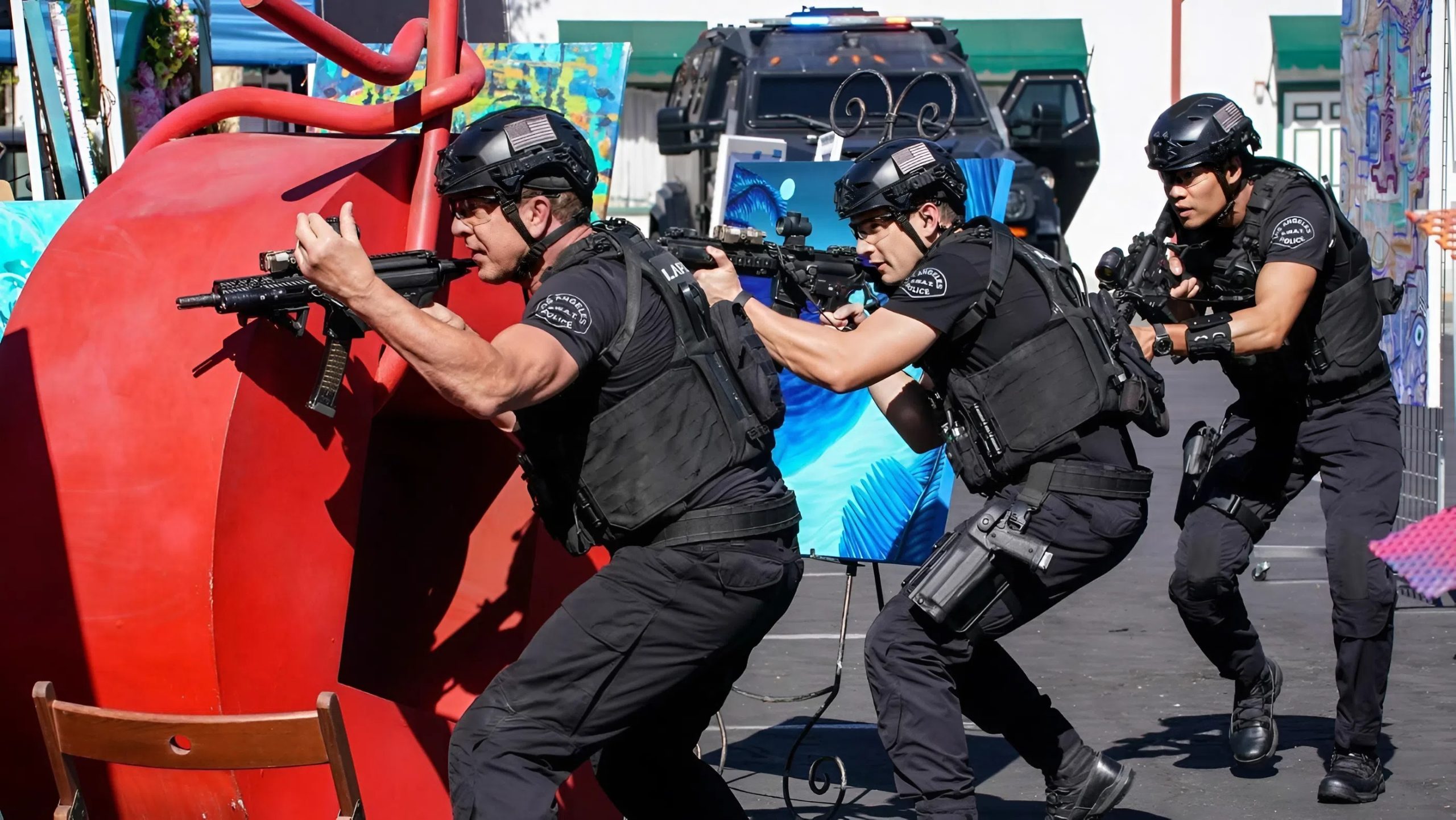
Why S.W.A.T. Never Needed Bigger Explosions to Raise the Stakes
Action television often falls into the same trap.
As seasons progress, the explosions become larger, the villains become more dangerous, and every finale tries to outdo the previous one. Eventually, the spectacle becomes so overwhelming that audiences stop feeling genuinely invested.

S.W.A.T. took a different path.
While the series certainly delivered its share of high-intensity action, it rarely relied on bigger explosions or increasingly unrealistic scenarios to keep viewers engaged. Instead, the show consistently found new ways to raise the stakes by focusing on the uncertainty surrounding every mission.
That approach helped the series remain exciting across eight seasons without losing the grounded style that attracted viewers in the first place.
The Mission Was Never Guaranteed to Go According to Plan
One of the defining characteristics of S.W.A.T. was its refusal to make operations feel routine.
Even when the objective seemed straightforward at the beginning of an episode, unexpected complications often forced the team to rethink its strategy.
A suspect might refuse to negotiate.
An evacuation could become more complicated than anticipated.
New information could completely change the priorities of the mission.
Rather than relying on increasingly elaborate action sequences, the writers generated suspense by constantly changing the situation on the ground.
That unpredictability kept audiences invested because success never felt automatic.

Pressure Came From Time, Not Just Danger
Another strength of the series was its use of urgency.
Many episodes weren’t driven solely by the presence of armed criminals or dangerous environments. Instead, the real tension often came from the limited amount of time available to make the right decision.
Whether protecting civilians, coordinating multiple units, or responding to rapidly changing circumstances, the squad frequently faced situations where every minute mattered.
That time pressure created suspense without requiring unrealistic action.
Viewers understood that hesitation could carry serious consequences, making even relatively quiet scenes feel remarkably intense.
Small Decisions Often Changed Everything
Unlike many action dramas where only the climactic battle matters, S.W.A.T. regularly emphasized the importance of preparation.
Brief planning sessions.
Quick tactical discussions.
Carefully coordinated movements.
These moments demonstrated that successful operations depended on dozens of small decisions made before anyone entered a dangerous situation.
By highlighting preparation instead of only the final confrontation, the series gave audiences a greater appreciation for the professionalism of the team.
It wasn’t just about courage.
It was about discipline, communication, and making the correct choice under pressure.
The Show Trusted Realistic Tension
One reason S.W.A.T. aged well is that it rarely depended on unbelievable twists simply to surprise viewers.
Instead of constantly introducing impossible scenarios, the series allowed realistic uncertainty to drive its stories.
No operation unfolded exactly as expected.
No strategy guaranteed success.
No outcome felt completely certain until the mission ended.
That realism created a different kind of excitement—one rooted in anticipation rather than spectacle.
Why That Formula Still Works Today
Looking back, it’s clear that S.W.A.T. didn’t need to become louder to remain compelling.
The series understood that audiences don’t necessarily remember the biggest explosion or the largest set piece.
They remember the moments when they genuinely weren’t sure what would happen next.
By building suspense through evolving situations, careful planning, and constant uncertainty instead of simply escalating destruction, S.W.A.T. created an action formula that continues to resonate with viewers long after its original broadcast.
It’s a reminder that in great television, tension isn’t measured by the size of the explosion—it’s measured by how much the audience cares about the people caught in the middle of it.