
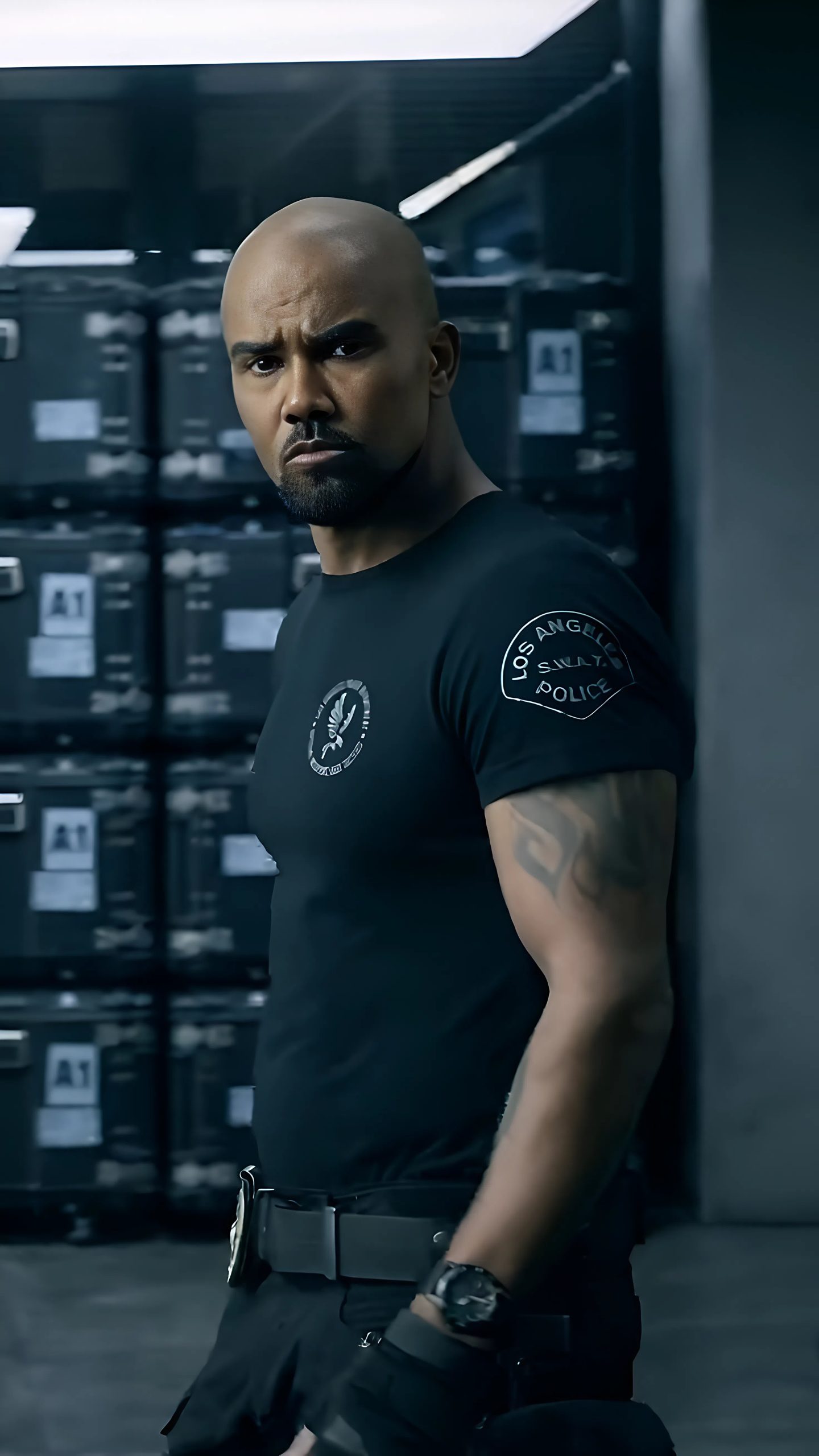
S.W.A.T. Understood That Every Mission Begins With Information, Not Action
Action Was Never the First Step
When audiences think about police action dramas, they usually picture the most intense moments.
A tactical team surrounding a building.
A dangerous suspect refusing to surrender.
A dramatic rescue unfolding under immense pressure.
Those scenes undoubtedly became some of S.W.A.T.‘s most memorable sequences, but they rarely represented where the story actually began.
Instead, the series consistently reminded viewers that every successful operation started long before the team arrived at the scene.
It began with information.
Questions had to be answered before any strategy could be developed.
Who was involved?
What exactly had happened?
How many civilians were at risk?
What details were still unknown?
By placing such importance on gathering intelligence, S.W.A.T. demonstrated that preparation wasn’t simply a procedural requirement—it was the foundation of every mission.

The First Report Was Rarely the Complete Story
One of the recurring ideas throughout the series was that initial information could be incomplete, outdated, or even misleading.
Early reports often provided only part of the picture.
As new details emerged, the squad frequently had to reassess their assumptions and adjust their strategy.
That storytelling choice reflected an important reality.
The first version of any situation is rarely the final one.
Rather than portraying tactical operations as straightforward responses to obvious threats, S.W.A.T. highlighted how uncertainty shaped nearly every decision.
The team wasn’t simply reacting.
They were constantly learning.
Good Decisions Depend on Good Information
The series repeatedly reinforced a simple but powerful principle: even the most experienced officers cannot make effective decisions without accurate intelligence.
Every piece of information mattered.
The layout of a building.
The number of people inside.
Possible escape routes.
The emotional state of those involved.
None of these details guaranteed success, but together they allowed the squad to build a strategy based on facts instead of assumptions.
That emphasis on informed decision-making gave the show an authenticity that separated it from action dramas driven purely by instinct.
The Situation Could Change in Seconds
Even after careful preparation, S.W.A.T. rarely suggested that information remained static.
New developments frequently emerged while operations were already underway.
Unexpected movements.
Additional suspects.
Changing conditions.
Fresh intelligence from officers on the ground.
Instead of treating those moments as dramatic twists alone, the series showed how experienced teams continuously process new information throughout a mission.
Planning didn’t stop once the operation began.
It evolved.
That adaptability became one of the defining qualities of 20-Squad.

Intelligence Was a Team Effort
The show also emphasized that gathering information wasn’t the responsibility of a single individual.
Every member of the squad contributed observations.
Dispatch updates.
Witness accounts.
Visual assessments.
Communication between officers.
Each piece of information added another layer to the overall picture.
This collaborative approach reinforced one of the series’ central themes—that successful outcomes rarely depended on one person’s brilliance.
Instead, they resulted from multiple professionals sharing knowledge and working toward the same objective.
Knowing More Often Meant Using Less Force
One of the more subtle lessons throughout S.W.A.T. was that better information often led to calmer solutions.
Understanding the situation more clearly sometimes opened the door to negotiation instead of confrontation.
It allowed officers to identify safer approaches, protect civilians more effectively, and reduce unnecessary risks.
The series never suggested that every situation could be resolved peacefully.
However, it consistently argued that informed decisions are almost always better than rushed ones.
That message added another layer of realism to the show’s action.
A Lesson That Extends Beyond Television
Although S.W.A.T. centered on tactical policing, its approach to information gathering reflects a broader truth.
The best decisions in any profession are usually made after listening, observing, and understanding the situation as completely as possible.
Whether leading a business, managing a team, or solving everyday problems, acting before gathering enough information often creates avoidable mistakes.
The series quietly illustrated this principle through nearly every mission without ever turning it into a lecture.
It simply allowed viewers to see preparation in action.
Intelligence Was the Real Beginning of Every Victory
Looking back across eight seasons, one pattern becomes impossible to ignore.
The operations audiences remember didn’t start with a dramatic breach or an explosive confrontation.
They started with conversations.
Briefings.
Careful observation.
Questions that needed answers before anyone could move forward.
By making intelligence gathering an essential part of its storytelling, S.W.A.T. reminded viewers that success isn’t determined by who acts first.
It’s determined by who understands the situation best.
That idea may not generate the loudest television moments, but it remains one of the smartest lessons the series consistently delivered.
S.W.A.T. proved that action without information is little more than guesswork. Throughout its eight-season run, the series highlighted the importance of gathering intelligence, reassessing situations, and adapting to new developments before making critical decisions. By treating information as the true starting point of every mission, S.W.A.T. delivered a more thoughtful and believable approach to action storytelling—one that continues to resonate with audiences long after the final episode.