
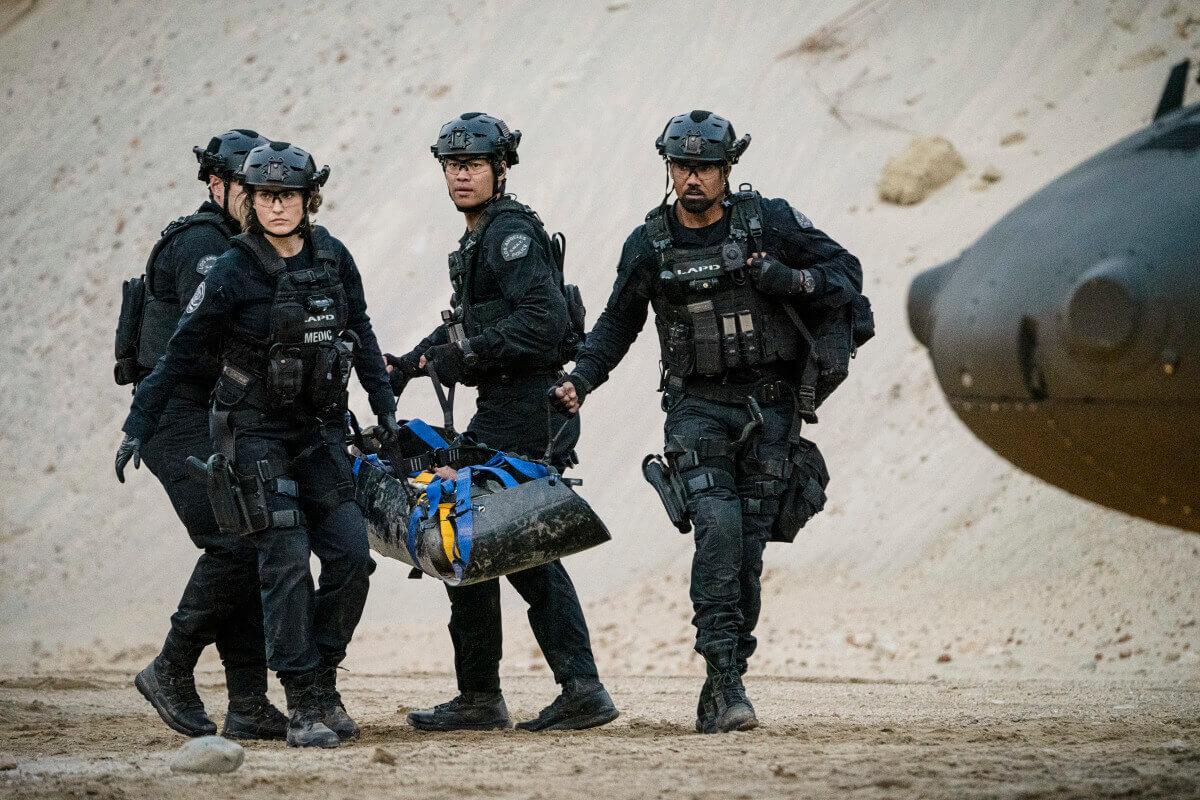
Why S.W.A.T. Didn’t Need Supervillains to Keep Viewers Hooked
Many action dramas introduce increasingly dangerous villains as the seasons progress.
Criminal masterminds become more elaborate.
Threats become larger.
Plots become more unbelievable.
S.W.A.T. largely resisted that trend.
Instead of building every storyline around larger-than-life antagonists, the series focused on situations that felt grounded, immediate, and believable.
That creative decision quietly became one of the defining characteristics of the show.

The Situation Was Often More Dangerous Than the Suspect
In many episodes, viewers didn’t remember the name of the criminal by the time the credits rolled.
What they remembered was the situation itself.
A neighborhood suddenly thrown into chaos.
A rescue operation where every second mattered.
A rapidly changing environment where one mistake could endanger dozens of lives.
The suspense came from uncertainty rather than from creating unforgettable villains.
Keeping the Stakes Real
By avoiding exaggerated comic-book-style adversaries, S.W.A.T. maintained a sense of realism that appealed to many fans.
The series suggested that danger doesn’t always arrive wearing a recognizable face.
Sometimes it grows from confusion, panic, poor decisions, or rapidly escalating events.
That perspective made the missions feel unpredictable because the audience never knew exactly how each crisis would unfold.
A Different Kind of Action Drama

Looking back, this approach helped S.W.A.T. carve out its own identity.
Rather than asking viewers to remember a single iconic villain, the series encouraged them to remember the challenges faced by the squad and the communities they protected.
In doing so, S.W.A.T. proved that a compelling action drama doesn’t always need a larger-than-life enemy.
Sometimes, the most gripping stories come from believable situations—and that realism is one reason the series continues to resonate with audiences today.