
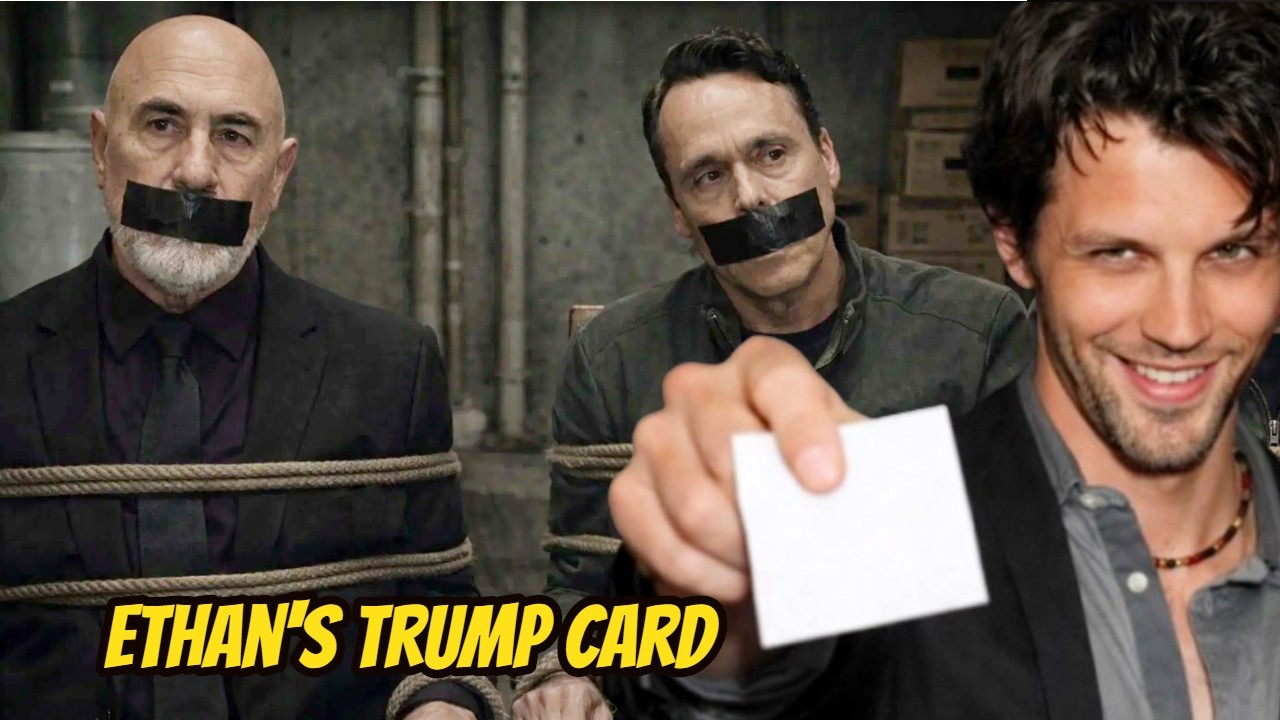
Ethan’s DEADLY Secret Weapon DEVASTATES Sidwell And Cullum While Sonny Is UTTERLY SHOCKED!
Port Charles has always felt like more than a backdrop to me—it feels like a living system where every old secret eventually resurfaces, no matter how deeply it was buried. That’s why Ethan’s return on General Hospital doesn’t read like nostalgia to me. It reads like disruption.
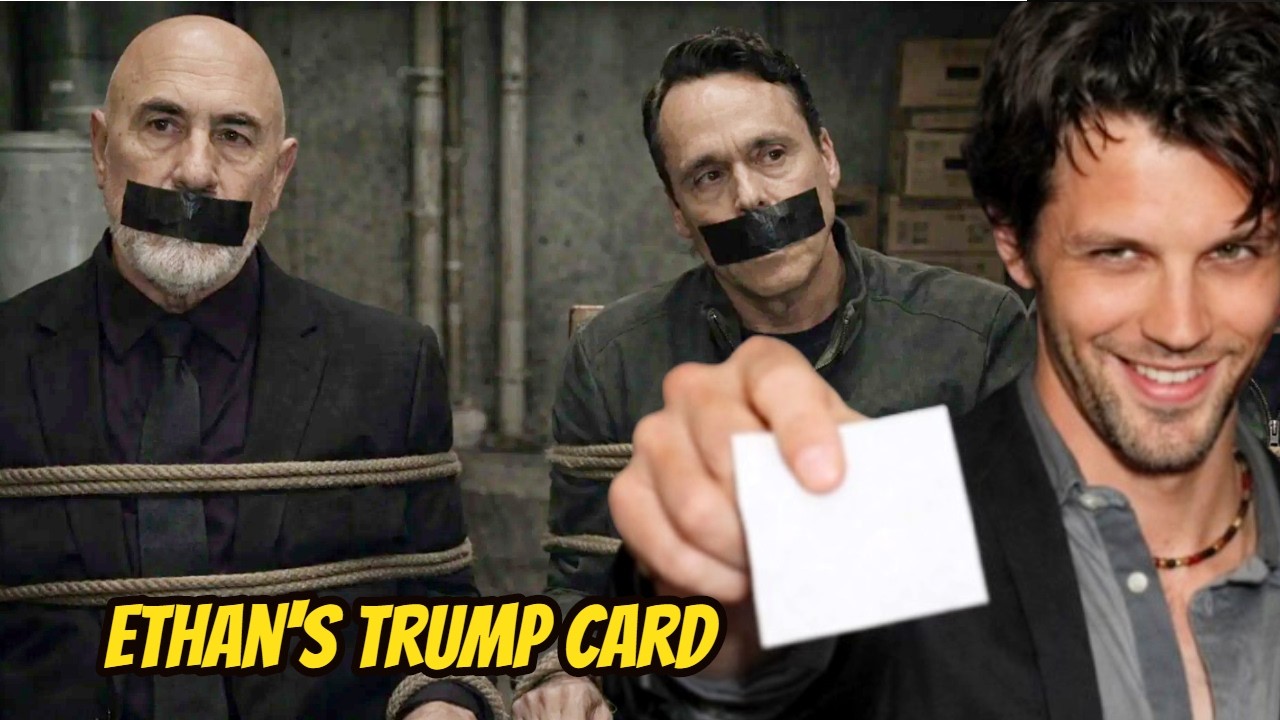
Because Ethan isn’t coming back to reconnect. He’s coming back with intent. And if the current trajectory is any indication, that intent has a name attached to it: Sidwell and Cullum.
Two men who don’t operate like typical Port Charles antagonists. They don’t rely on impulsive chaos or personal grudges. They represent something colder—structured influence, layered corruption, and long-term control. And Ethan stepping into their orbit signals something the canvas hasn’t felt in a while: a calculated war with emotional consequences that will not stay contained.
This isn’t just about taking enemies down. It’s about what Ethan becomes while trying to do it.
Ethan Returns — But He’s Not the Same Man Who Left
Ethan has always been a character suspended between worlds. He is Luke Spencer’s son, Holly Sutton’s child, and yet never fully owned by either legacy. That tension has always defined him—caught between inherited chaos and personal identity.
Now, he returns carrying all of it at once.
But what feels different this time is focus. Ethan isn’t drifting into Port Charles for answers or reconciliation. He’s arriving with a mission that feels sharpened by experience and emotional distance. Sidwell and Cullum aren’t just targets—they are obstacles in a larger reckoning that feels almost generational.
Luke and Holly lived lives defined by improvisation, deception, and survival. Ethan is what happens when that legacy matures and asks a harder question: what was all that survival actually for?
That question is where this story begins to crack open.
Sidwell and Cullum: The Kind of Enemies Port Charles Rarely Escapes Easily
What makes Sidwell and Cullum so compelling as antagonists is not just their threat level—it’s their stability. They don’t explode like chaos agents. They embed themselves.
They influence systems rather than individuals. They don’t just create conflict—they structure it.
That means Ethan’s fight against them cannot be straightforward. It cannot rely on brute force or emotional reaction. It requires infiltration, patience, and moral compromise—the exact skills Ethan inherited but may not fully control.
And that is where the tension sharpens.
Because every step Ethan takes toward them risks pulling him further away from the identity he’s trying to define for himself.
The Spencer Legacy Reopens Its Doors
The most emotionally loaded layer of this story is not the mission itself—it’s the people orbiting it.
Lulu Spencer’s involvement immediately reframes Ethan’s return. Lulu is not passive in any sense of the word. She is instinctive, emotionally intelligent, and dangerously willing to lean into uncertainty if she believes it protects someone she cares about.
Her connection to Ethan doesn’t just reignite old history—it activates the Spencer reflex: protect, pursue, and never fully disengage once danger is detected.
And then there is Laura Collins.
Laura’s presence in any high-stakes situation changes the emotional gravity of it. She brings legitimacy, moral structure, and emotional grounding. If she supports Ethan, it signals something important: this isn’t just a rogue mission. It’s something the Spencer family is implicitly aligning itself with.
Together, Laura and Lulu create a protective framework around Ethan—but also a pressure system. The more they invest in him, the more devastating any failure becomes.
Sasha: The Wild Card Emotional Fault Line
Sasha’s potential involvement introduces a completely different emotional frequency into this storyline.
Where Ethan is control and mission focus, Sasha is lived consequence. She carries trauma not as abstraction, but as residue. Every decision she makes feels shaped by survival rather than strategy.
If she is drawn into this orbit—whether through Ethan directly or through Sidwell and Cullum’s broader reach—the story gains something critical: emotional realism.
Sasha doesn’t just react to danger. She absorbs it. And that makes her one of the few characters capable of grounding Ethan when his focus risks turning into fixation.
Or destabilizing him further if she becomes part of the collateral damage.
Sonny Corinthos Enters a Different Kind of War
Perhaps the most intriguing shift is Sonny’s position in all of this.
Sonny understands control. He understands territory, loyalty, retaliation. But Sidwell and Cullum represent a different kind of threat—less visible, more systemic, and harder to predict.
Ethan, unexpectedly, becomes a bridge between Sonny’s world and something more unconventional. Strategy meets improvisation. Structure meets instinct.
On paper, it works.
In reality, it’s volatile.
Sonny doesn’t fully trust unpredictability, and Ethan doesn’t fully operate within established rules. That tension alone creates a fragile alliance that could shift at any moment depending on pressure, losses, or personal stakes.
And yet, Sonny may have no better option.
Because Sidwell and Cullum are not enemies you outmuscle. They are enemies you outthink.
The Real Conflict Isn’t External — It’s Internal
What elevates this arc beyond a standard revenge storyline is that Ethan is not just fighting Sidwell and Cullum.
He is fighting the inherited blueprint of his own life.
Luke Spencer didn’t survive by playing clean. Holly Sutton didn’t survive by staying still. Ethan’s entire identity is built on adaptation under pressure.
But this mission asks something different: can he still be that man without becoming consumed by it?
That is where the emotional stakes truly live.
Every alliance—Lulu, Laura, Sonny—pulls him in a slightly different direction. Every enemy forces a different version of him to surface. And every decision risks blurring the line between justice and obsession.
The question becomes less about victory and more about preservation.
Will Ethan still recognize himself when this is over?
Why This Storyline Actually Works
What makes this arc compelling is that Sidwell and Cullum are not just external threats—they are emotional catalysts. They expose cracks in everyone they touch.
Laura questions what protection really means.
Lulu tests the limits of loyalty versus safety.
Sonny confronts how much control he actually has when the battlefield changes shape.
Sasha becomes a reminder of what survival costs.
And Ethan becomes the axis everything rotates around.
This isn’t nostalgia for legacy’s sake. It’s legacy being stress-tested in real time.
And that distinction matters.
A War That Could Redefine Port Charles
If General Hospital commits to this direction, Ethan’s return could reshape more than just a single storyline. It could reintroduce a balance the show has occasionally lost—the tension between adventure-driven storytelling and emotionally grounded consequence.
Because the best GH arcs have never been about who wins.
They’ve been about what victory costs.
And Ethan’s path toward Sidwell and Cullum is already shaping up to ask that question at every turn.
Not just for him.
But for everyone who chooses to stand beside him.
And in Port Charles, that is always where the real danger begins.